The twenty-four one-sound signs, from the vulture 𓄿 to the cobra 𓆓
Hieroglyphics translator
The Egyptian hieroglyphs that write a single sound, with what each depicts, the Egyptologists' reading and the letter the modern convention gives it, and a translator that writes a name the way the scribes wrote foreign names. Anna becomes 𓄿𓈖𓈖𓄿. Every sign carries its number in Gardiner's list.
What the Egyptian alphabet is
Egyptian writing was never an alphabet. A text on a temple wall mixes three kinds of sign: those that write one sound, those that write two or three sounds at once, and those that are not read at all but say what kind of thing the word is about, a seated man for a personal name, a sun for a word of time. Gardiner's list, the catalogue Egyptologists use, has more than seven hundred signs of the classical period, each with a number, such as G1 for the vulture and G17 for the owl, which the table on this page carries beside each sign.
Within that set, twenty-four signs write a single sound, and they would have sufficed to write any word. The Egyptians knew this and did not do it: they kept the mixed script for three thousand years and used purely sign-by-sign spelling mainly for names that came from outside, those of the Greek and Persian kings who ruled them in the last centuries. That is what opened the door to decipherment: the names of Ptolemy and Cleopatra, inside their cartouches, were written with the uniliterals, and the sounds read out of them by Thomas Young and others gave Champollion the ground he stood on in 1822.
The alphabet seen in museums and on pendants is that set of uniliterals with a Latin letter beside each. It is a useful and honest convention as long as one says what it is: a way of writing a modern name as an Egyptian scribe would have written a foreign one, not a way of writing an Egyptian word. The box above does exactly that, and the caveat block at the end of the page says the rest.
How it is read
Egyptian wrote no vowels. The A, the second A and the I of the table are the modern reading of consonants English does not have, two of them from the throat, and Egyptologists transliterate them with signs of their own, the aleph and the ayin, which the name column shows in parentheses. When an Egyptologist says an Egyptian word aloud, an E is inserted between the consonants by convention, and that is why the names of gods and kings we know, Ra, Amun, Tutankhamun, are reconstructions. Typed into the box above, the modern spelling Ra comes out as 𓂋𓄿, the mouth and the vulture: the consonants are Egyptian, the vowel is ours, and the ancient writing had no sign for it.
The direction of reading is given by the signs themselves. Animals, birds and people look towards the start of the line; when the owl faces right, the text starts on the right. Scribes also wrote in columns, top to bottom, and on monuments the two directions appear mirrored for symmetry around a doorway or a central figure. This page writes left to right, the direction in which modern fonts draw the signs, and the translator does the same.
The table
The twenty-four uniliterals with the conventional letter, what each sign depicts and the Egyptologists' reading in parentheses.
| Letter | Sign | Name |
|---|---|---|
| a | 𓄿 | vulture (ꜣ) |
| i | 𓇋 | reed (i) |
| aa | 𓂝 | forearm (ꜥ) |
| w | 𓅱 | quail chick (w) |
| b | 𓃀 | foot (b) |
| p | 𓊪 | stool (p) |
| f | 𓆑 | horned viper (f) |
| m | 𓅓 | owl (m) |
| n | 𓈖 | water (n) |
| r | 𓂋 | mouth (r) |
| h | 𓉔 | shelter (h) |
| hh | 𓎛 | wick (ḥ) |
| kh | 𓐍 | placenta (ḫ) |
| x | 𓄡 | belly (ẖ) |
| s | 𓋴 | folded cloth (s) |
| z | 𓊃 | door bolt (z) |
| sh | 𓈙 | pool (š) |
| q | 𓈎 | hill slope (q) |
| k | 𓎡 | basket (k) |
| g | 𓎼 | jar stand (g) |
| t | 𓏏 | bread (t) |
| tj | 𓍿 | rope (ṯ) |
| d | 𓂧 | hand (d) |
| dj | 𓆓 | cobra (ḏ) |
The twenty-four signs
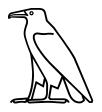
𓄿avulture (ꜣ)
- Drawing
- Written
- a
- Unicode
U+1313F- Reference
- G001
The Egyptian vulture, sign G1 in Gardiner's list. Egyptologists transliterate it with a sign of its own, the aleph, which stood for a throat consonant and not a vowel; since Egyptian wrote no vowels, the modern convention reads it as A, and it is the sign for the A of a name. One of the commonest signs in any text.
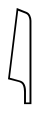
𓇋ireed (i)
- Drawing
- Written
- i, y
- Unicode
U+131CB- Reference
- M017
The flowering reed, M17, read as a weak I or Y. Doubled, it marks a Y at the end of a word, and that is how it appears in many royal names. It is the sign museum alphabets use for I and J, and the page follows that convention while noting that the ancient reading was a semivowel.
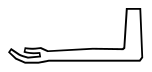
𓂝aaforearm (ꜥ)
- Drawing
- Written
- aa
- Unicode
U+1309D- Reference
- D036
The forearm with the hand open, D36, transliterated with the ayin, a throat consonant that English lacks and Arabic still has. In the modern conventions it becomes a long A or a second A, and so museum alphabets carry two signs for one Latin letter.
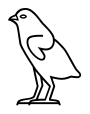
𓅱wquail chick (w)
- Drawing
- Written
- w, u
- Unicode
U+13171- Reference
- G043
The quail chick, G43, read as W or as the vowel U. It is the plural ending of many nouns and one of the commonest signs in any text, which makes it easy to spot: a small round bird facing the start of the line. It writes the U and the W of a modern name.
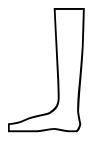
𓃀bfoot (b)
- Drawing
- Written
- b
- Unicode
U+130C0- Reference
- D058
The human leg and foot seen from the side, D58, with the sound of B. It is one of the signs whose reading nobody disputes, because it appears in words whose sound is known from other languages. The foot points in the direction the text is read, like every sign with a front and a back.
𓊪pstool (p)
- Drawing

- Written
- p
- Unicode
U+132AA- Reference
- Q003
A stool or reed mat seen from above, Q3, an almost empty rectangle, with the sound of P. Being a simple sign it is among the easiest to copy and among the first that students learn. It writes the P of any name and appears twice in the name of the pharaoh Pepi.
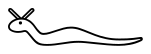
𓆑fhorned viper (f)
- Drawing
- Written
- f
- Unicode
U+13191- Reference
- I009
The horned viper, I9, a small snake with two horns, read as F. It doubles as the third-person suffix, which makes it omnipresent: almost every Egyptian sentence has one. It writes the F of names and appears in museum alphabets with its head turned to the right.
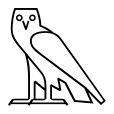
𓅓mowl (m)
- Drawing
- Written
- m
- Unicode
U+13153- Reference
- G017
The owl seen from the front, G17, with the sound of M, the only bird among the signs that looks at the reader. It is the preposition in and the M of any word, which puts it among the five commonest signs in the script. In modern names it writes M without further note.
𓈖nwater (n)
- Drawing

- Written
- n
- Unicode
U+13216- Reference
- N035
The ripple of water, N35, with the sound of N. Three ripples stacked write water itself. It is a zigzag line, easy to write and easy to confuse with the line for land, which does not ripple. It writes the N of names and the preposition of.
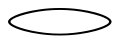
𓂋rmouth (r)
- Drawing
- Written
- r, l
- Unicode
U+1308B- Reference
- D021
The mouth seen from the front, D21, an elongated oval, with the sound of R. Since Egyptian did not distinguish R from L in many words, foreign names with an L are usually written with this sign, and that is how the table uses it for both letters. It is also the preposition to.
𓉔hshelter (h)
- Drawing
- Written
- h
- Unicode
U+13254- Reference
- O004
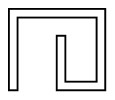
The reed shelter seen from above, O4, a rectangle with an opening, read as the plain H. It is the first of four consonants Egyptologists tell apart with dots and lines under the H, and the only one that sounds like the aspirated H of English. It writes the H of names.
𓎛hhwick (ḥ)
- Drawing
- Written
- hh
- Unicode
U+1339B- Reference
- V028
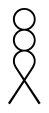
A twisted wick of flax, V28, read as an emphatic H, transliterated with a dot beneath. It is the H of words like hotep, peace, which appears in the name Amenhotep. Museum alphabets usually set it beside the plain H without explanation; here the difference is stated.
𓐍khplacenta (ḫ)
- Drawing

- Written
- kh
- Unicode
U+1340D- Reference
- Aa001
A round sign with lines, Aa1, whose identification is debated; the traditional explanation is a placenta or a sieve. It is read like the CH of German or the Spanish J, a throat sound, and it writes the KH of names such as Khufu, the king of the Great Pyramid.
𓄡xbelly (ẖ)
- Drawing
- Written
- x
- Unicode
U+13121- Reference
- F032
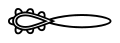
The belly of an animal with its teats, F32, read as a softer H than the last, transliterated with a line beneath. It has no English equivalent and museum tables omit it or fold it into KH. The page keeps it, with the letter X as its convention, so that the list of uniliterals is complete.
𓋴sfolded cloth (s)
- Drawing
- Written
- s
- Unicode
U+132F4- Reference
- S029
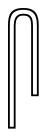
A folded cloth, S29, a vertical line with a small loop, read as S. It has the most stable reading of all the signs and is frequent in suffixes and names. In the earliest periods Egyptian distinguished two S sounds, and this is the one that survived their merger.
𓊃zdoor bolt (z)
- Drawing
- Written
- z
- Unicode
U+13283- Reference
- O034
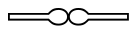
A door bolt seen from the side, O34, a horizontal bar, read as Z in the early periods and as S later. It is the other S of Egyptian writing, the one that merged with the folded cloth. The table uses it for the Z of modern names, which is the convention of museum alphabets.
𓈙shpool (š)
- Drawing
- Written
- sh
- Unicode
U+13219- Reference
- N037
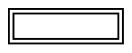
A pool or rectangular lake seen from above, N37, read as the SH of ship. It is the SH of names like Shoshenq and of common words such as the verb to receive. A low, wide rectangle, easy to tell from the stool, which is narrower.
𓈎qhill slope (q)
- Drawing

- Written
- q
- Unicode
U+1320E- Reference
- N029
A hill slope, N29, a triangle with one curved side, read as a K from the back of the throat, transliterated with Q. It is the emphatic consonant that Arabic writes with qaf. In modern names it writes Q, and some museum alphabets use it for K as well.
𓎡kbasket (k)
- Drawing
- Written
- k, c
- Unicode
U+133A1- Reference
- V031
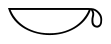
A basket with a handle seen from the side, V31, read as K. One of the most recognisable signs and the second-person pronoun, which makes it extremely frequent. It writes the K and the hard C of modern names, though the scribes who wrote Cleopatra's cartouche chose the hill slope, the other K, for her initial.
𓎼gjar stand (g)
- Drawing

- Written
- g
- Unicode
U+133BC- Reference
- W011
A jar stand, W11, a low sign on two feet, read as G. It is rare compared with the others and has no great grammatical role, which makes it above all the sign for the G of foreign names. It appears in the writing of Geb, the earth god.
𓏏tbread (t)
- Drawing

- Written
- t
- Unicode
U+133CF- Reference
- X001
A round loaf seen from the side, X1, a half circle, read as T. It is the feminine ending of nearly every Egyptian word, which places it among the two or three commonest signs in any text. It writes the T of names; for the TCH sound, see the next sign.
𓍿tjrope (ṯ)
- Drawing

- Written
- tj, ch
- Unicode
U+1337F- Reference
- V013
A tethering rope, V13, read as a TCH, the CH of church, transliterated with a T and a line beneath. In the later periods it merged with the plain T. It writes the CH of names that sound like church; for the SH of ship, use the pool.
𓂧dhand (d)
- Drawing
- Written
- d
- Unicode
U+130A7- Reference
- D046
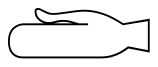
A hand seen from above, D46, read as D. A simple and frequent sign, appearing in many words and names. Museum alphabets give it as D without further note, and the hand points its fingers in the direction the text is read, like the leg and foot.
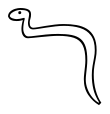
𓆓djcobra (ḏ)
- Drawing
- Written
- dj, j
- Unicode
U+13193- Reference
- I010
The rearing cobra, I10, read as a DJ, the J of jam, transliterated with a D and a line beneath. It is the first sign of the name of Djoser, the king of the step pyramid, and of Djehuti, the god Thoth. It writes the J of names, which Egyptian pronounced roughly so.
Practise
Flashcards for recognising each sign by its conventional letter, and reading series. It starts with five signs and adds the next when the active ones are firm. Progress stays in your browser.
5 of 24 signs in play. 0 of 5 learned; the next sign comes when all are.
- 𓄿 a not yet
- 𓇋 i not yet
- 𓂝 aa not yet
- 𓅱 w not yet
- 𓃀 b not yet
What this table does not say
This table is a modern convention, not the system as its users practised it.
- The signs listed are the uniliterals, those writing a single sound; Egyptian had hundreds of others, for two and three sounds and for meaning.
- Egyptian wrote no vowels; the A, the second A and the I of the table are the modern reading of consonants English lacks, not of vowels.
- Writing a name with this table is what the scribes themselves did with foreign names, syllable by syllable; it is not writing the language.
Frequently asked
Is there a hieroglyphic alphabet?
Not like ours. Egyptian writing had hundreds of signs, some for one sound, others for two or three, others for the sense of a word. The twenty-four one-sound signs are the uniliterals, and it is from them that the alphabet of the museums and of this page is made, a modern convention the Egyptians themselves used only for foreign names.
How do I write my name in hieroglyphics?
Type it in the box above: each letter becomes the uniliteral sign of the nearest sound. Anna becomes 𓄿𓈖𓈖𓄿, and read back gives anna. Sounds the table has no sign for, the vowels E and O among them, are left out and the box says so: in John, o has no sign. It is what the scribes did with Greek and Persian names, syllable by syllable.
Are hieroglyphs read left to right?
Either way, and top to bottom too. The signs with faces, the animals and the people, look towards the start of the line: if the vulture faces left, the text starts on the left. On monuments both directions appear side by side for symmetry. This page writes left to right, as modern fonts do.
What is a cartouche?
The oval line around the name of a king or queen in inscriptions. It is what let the script be read: Thomas Young picked the sounds of Ptolemy out of the cartouche on the Rosetta Stone, William John Bankes proposed Cleopatra in the cartouches of an obelisk from Philae, and in 1822 Champollion corrected those readings and showed that the same sound signs, the uniliterals of this table, wrote Egyptian itself and not only foreign names.
Why two signs for A and several for H?
Because the table is a convention over a script with no vowels. The vulture and the forearm wrote two throat consonants English lacks, and the modern reading brings both near an A. The four H signs wrote four distinct sounds, from the aspirated H to the German CH; the page keeps them all, with the difference stated in each.